Rhythm Is Used in Art Pattern Is Used in Art
Rhythm in art refers to the organisation of shapes in a way which creates an underlying beat. Information technology is similar to the rhythm of music, but instead of notes and sounds, we use colors and shapes.
The all-time way to acquire about rhythm in art is to see it in action. Below, I have a closer look at master paintings which feature a strong use of rhythm.
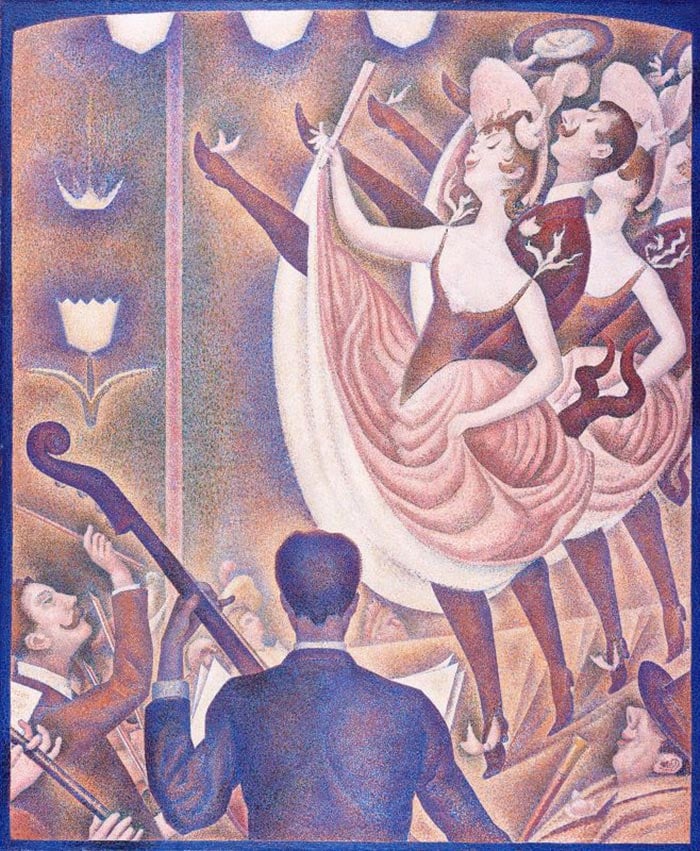
Georges Seurat, Sketch for Cabaret, 1890
Examples of Rhythm in Art
Beneath is a fantastic demonstration of rhythm using nature by Claude Monet. The trees are spaced at almost even distances apart, but there is some variance to make it seem natural. This provides a strong crush to the painting.
The leaves on the treetops merge together to create a snaking S-shape. This joins the tree trunks together and reinforces the beat.
In the background, there is a much more organic system of clouds in the sky. This breaks up the sense of rhythm in the painting.
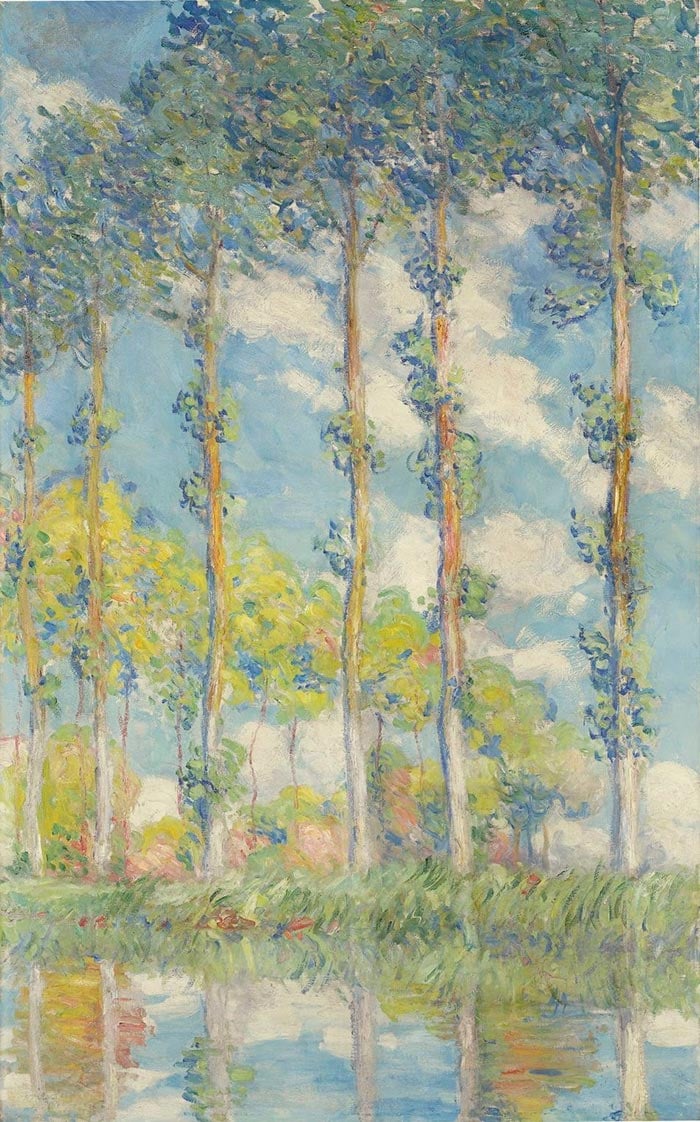
Claude Monet, Poplar, 1891
Below is a similar but more realistic case of rhythm by Ivan Shishkin. The tall trees provide a beat out to the painting. The beat is stronger with the nearest copse and gets weaker as the copse recede into the masses.
As well, notice how the bottom of the painting is organic and does not appear to take any sense of rhythm. This surface area contrasts confronting the strong rhythm of the surface area above.
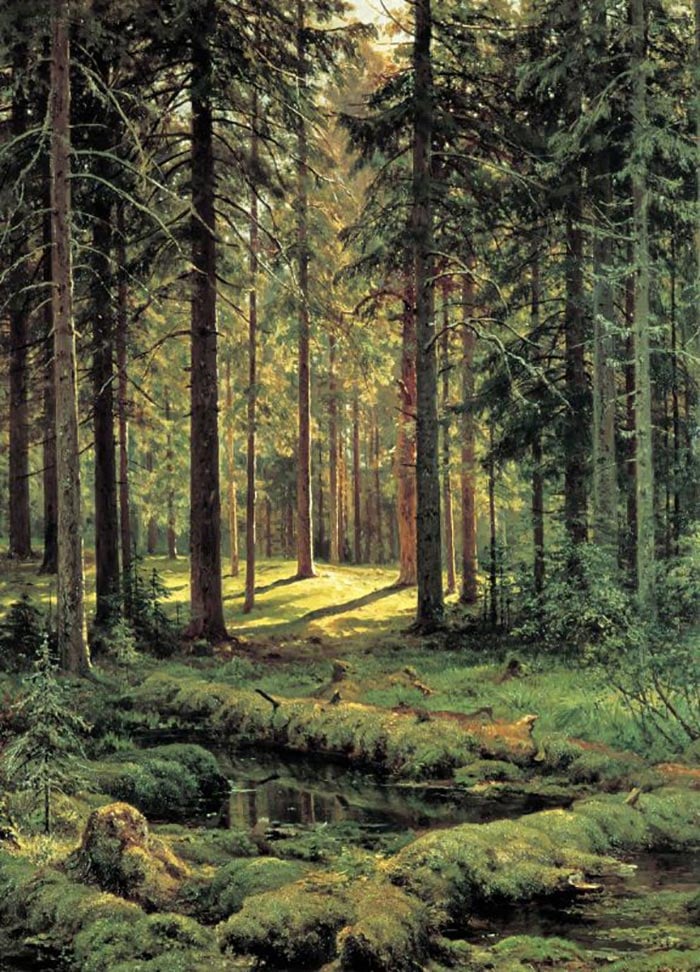
Ivan Ivanovich Shishkin, A Coniferous Wood. Sunny Day, 1895
In Vincent van Gogh'southUndergrowth with Two Figures, the trees provide a very repetitive beat, which contrasts against the energetic brushwork used for the grass and flowers.
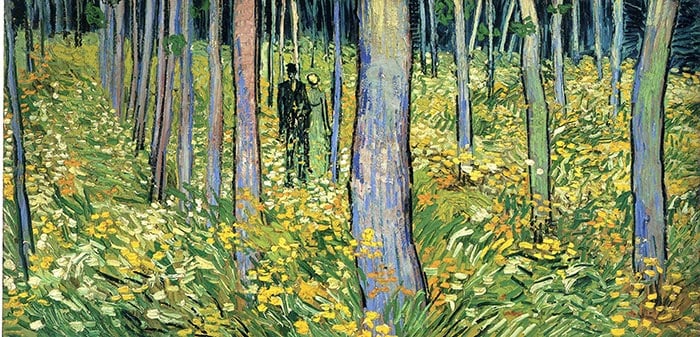
Vincent van Gogh, Undergrowth with Two Figures, 1890
In the painting below by George Inness, rhythm is created past the vague fence posts which recede into the distance. These contend posts and then join with the line of copse and houses. This contains your attending around these areas. Likewise, the tall tree on the correct stands out as it does not conform to the standard rhythm of the overall painting. It is like a loud musical annotation used to grab your attention.
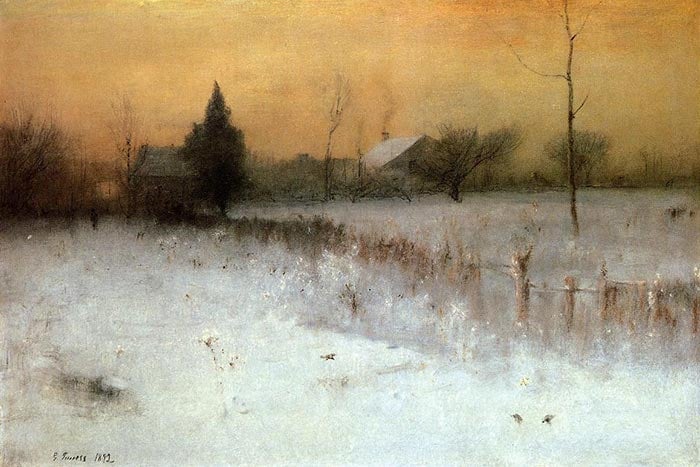
George Inness, Home at Montclair, 1892
There are two major elements of rhythm in the painting below: the Due south-shapes created by the ocean breaking along the shore, and the line of boats and people on the shore and in the water.
The foundation of the painting is built on soft, pastel colors. This allows the frail rhythm of the painting to stand up out.
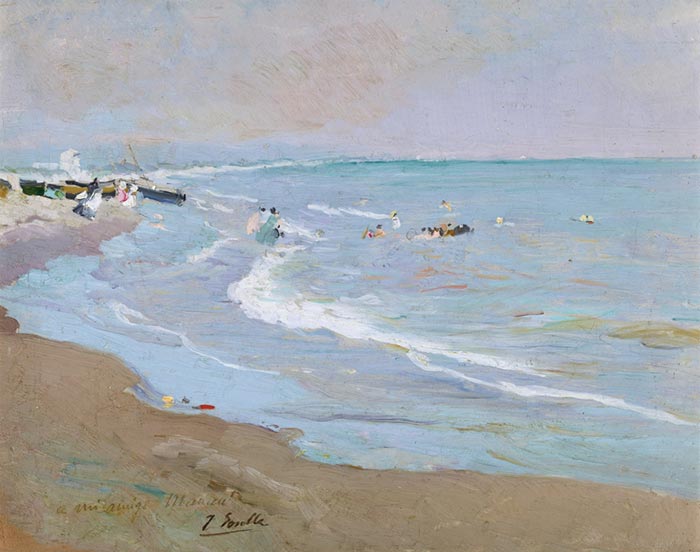
Joaquín Sorolla, The Beach in Valencia
In John Vocalist Sargent'southward painting below, a strong, organic rhythm is created by the contours in the water. The rhythm is stronger and more divers closer to shore.
This rhythm is broken by the fisherwoman. That is what painting is all about: creating a rhythm using patterns and shapes, and breaking that rhythm with powerful statements.
The ducks are also arranged in a way which provides a less-regular beat over the top.
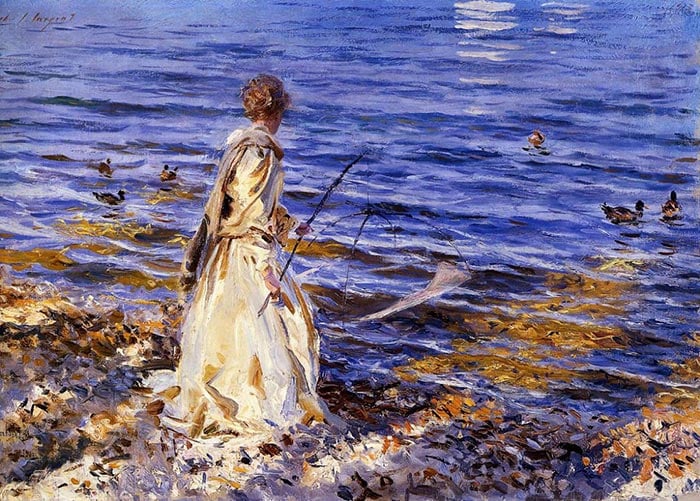
John Vocaliser Sargent, Fisherwoman, 1913
In Sargent's painting below, you can almostexperience the rhythm of the orchestra. If y'all look closely, the drummer and bass players are dominant in the foreground, whilst the contumely instruments appear delicate. This mimics their roles in music.
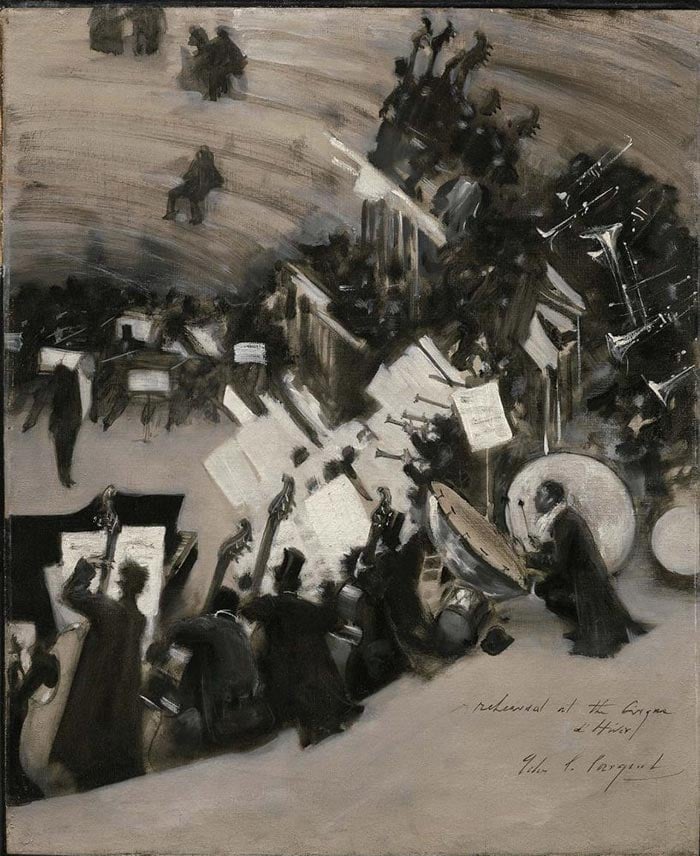
John Vocaliser Sargent, Orchestra Rehearsal of Jules Etienne Bastard, 1880
Tips for Using Rhythm in Art
- When it comes to rhythm in art, sometimes less is more. Don't endeavour to strength information technology if it is not in that location. But of grade, if rhythm is a strong characteristic of your painting, and so you lot may want to exaggerate it.
- You tin can brand a powerful statement by building upward a sense of rhythm in your painting, then abruptly breaking it (like Sargent did to some extent in his Fisherwoman).
- The rhythm of your painting could have many levels, not just i standard beat. Just like at that place are many dissimilar levels of the rhythm to a complex vocal. Information technology is non just one, regular beat; there are all kinds of tones and sounds woven together. For instance, in your painting yous could combine a strong crush using dominant and regular shapes, with a subtle trounce using intricate details and patterns.
- If you want to make a subtle rhythm stand out in your painting, then you lot need to tone down the surroundings. Just like in Sorolla's The Beach in Valencia.
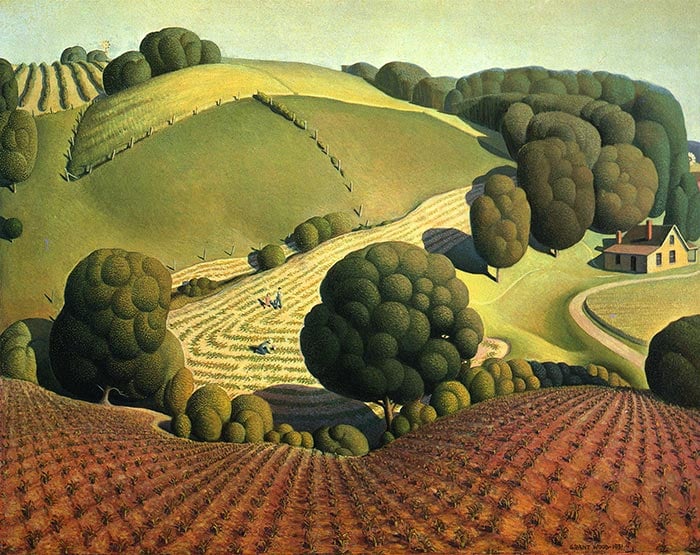
Grant Wood, Immature Corn, 1931
Exercise for Your Next Painting
When you lot are creating your side by side painting, think about if the field of study has a rhythm which you could capture. If not, consider manipulating the subject or framing it in a way to create a rhythm. For example, you could slightly change the position of certain objects to make them appear more regular, or button some things back and bring other things forward, or change the perspective. Just be careful not to depart also far from the subject you are painting, unless that is function of your strategy.
Also, before I wrap this up, I should note that rhythm does not demand to be apparent in your paintings. It is simply one of the many tools at your disposal.
Want to Acquire More?
Y'all might be interested in my Painting Academy course. I go into more detail on composition and how to employ it effectively in painting.
johnsongoverrestat.blogspot.com
Source: https://drawpaintacademy.com/rhythm/
0 Response to "Rhythm Is Used in Art Pattern Is Used in Art"
Post a Comment